
About
The Washington Climate Partnership, led by the Washington State Departments of Commerce and Ecology, is a statewide effort to plan near- and long-term strategies to meet state and federal climate and energy mandates. This is a collaborative effort that will require engagement and input from impacted communities, tribes, businesses, workers, subject matter experts, and more.
This effort is part of the Climate Pollution Reduction Grant (CPRG) Program, a federal funding program created through the Inflation Reduction Act and run by the U.S. Environmental Protection Agency (EPA). The program provides funding to states, local governments (like cities and counties), tribes, and territories to develop and implement plans for reducing greenhouse gas emissions and other harmful air pollution.




Frequently Asked Questions
General questions about CPRG in Washington
What is the Climate Pollution Reduction Grant Program (CPRG)?
The Climate Pollution Reduction Program (CPRG) is a federal funding program created through the Inflation Reduction Act and run by the U.S. Environmental Protection Agency (EPA). The program provides funding to states, local governments (like cities and counties), tribes, and territories to develop and implement plans for reducing greenhouse gas emissions and other harmful air pollution.
Why is it important for Washington to develop new climate plans?
Washington needs a statewide climate action plan, because WA residents are already experiencing the worsening impacts of climate change. The Washington Climate Partnership is a collaborative effort to identify opportunities across the state to reduce emissions and empower communities.
How is the Washington Climate Partnership relevant to me?
The Washington Climate Partnership centers collaboration with tribes, local and state agencies, and communities to determine the greenhouse gas reduction measures most relevant to their community and to Washington.
As we develop the climate action plans, we will work with communities to identify community-driven solutions to reduce greenhouse gas emissions. We will address environmental injustices for overburdened and vulnerable populations, as environmental injustice is a key focus of the CPRG climate action plans and greenhouse gas reduction measures. Health outcomes will improve as Washington implements greenhouse gas reduction measures. The greenhouse gas reduction measures identified through the CPRG process will create the need for high-quality green jobs.
Through this planning effort, we will have a better understanding of greenhouse gas emission sources and how to effectively reduce emissions while increasing climate resilience for communities in Washington.
What is Commerce/Ecology’s role with respect to the Washington Climate Partnership?
The EPA awarded 15 Climate Pollution Reduction Grants (CPRG) for climate planning to jurisdictions within Washington, including a $3 million statewide planning grant. The Washington Department of Commerce received the statewide planning grant and is the lead agency in charge of Washington’s statewide Priority Climate Action Plan (PCAP) and Comprehensive Climate Action Plan (CCAP) development. Commerce has an interagency agreement with the Department of Ecology and together they will be working on the three deliverables of the planning grant.
In addition to the statewide planning grant, the EPA awarded 10 tribal grants, 2 tribal consortium grants, and 2 Metropolitan Statistical Area (MSA) grants within the state of Washington.
Commerce/Ecology are partnering closely with the Puget Sound Clean Air Agency (PSCAA) who serves as the Lead Entity on behalf of the Seattle-Tacoma-Bellevue MSA on the statewide planning grant. Commerce/Ecology has reached out to all planning grant awardees within the state to coordinate on climate action plans.
Commerce and Ecology also work closely with the Governor’s Office and other state agencies to align and build on existing climate pollution reduction work already happening across the state.
What are Commerce/Ecology’s goals and milestones?
For the CPRG planning grant, Commerce/Ecology has three major milestones over the next four years:
- Priority Climate Action Plan (PCAP) – due March 1, 2024
- Comprehensive Climate Action Plan (CCAP) – due Dec. 1, 2025
- Status Report and Update – due Summer 2027
Through the Washinton Climate Partnership, Commerce/Ecology aims to reduce climate pollution, including toxic air pollution, address environmental injustice from disproportionate pollution exposure, and create green jobs in Washington.
What types of CPRG support can I receive from the Commerce/Ecology?
Commerce and Ecology are seeking:
- Input on and ideas for greenhouse gas measures (i.e. climate actions) applicable to their communities.
- Feedback on greenhouse gas reduction plans (e.g., community benefits and disbenefits, unintended consequences, etc.).
- Strengthening relationships with communities and community partners.
Identifying implementation partners and pathways for greenhouse gas reduction plans.
How is Commerce/Ecology coordinating with other CPRG planning grant recipients in Washington?
Commerce and Ecology are working closely with the Tribes, Tribal consortiums, and MSAs that received CPRG planning grants to ensure climate planning efforts around the state are well-coordinated.
Throughout the lifetime of the climate pollution reduction planning grants, Commerce/Ecology is hosting a monthly tribal coordination workgroup. The workgroup is an open dialogue between Tribes and the state and an opportunity for continued collaboration on the CCAP, to ensure tribal priorities are reflected and integrated into the statewide CCAP. Through the workgroup, Commerce/Ecology are also sharing climate planning resources, information about additional funding opportunities, and providing assistance to Tribes, as many Tribes are concurrently working on their own climate pollution reduction plans.
How does Commerce/Ecology envision the Priority Climate Action Plan (PCAP) and Comprehensive Climate Action Plan (CCAP) fitting in with other state plans and strategies?
Commerce and Ecology will continue to coordinate with other state agencies, and the Governor’s Office to identify priorities in alignment with state mandates and strategies.
As a starting point for the PCAP, the state considered measures collected as part of HB 1181 (2023 legislation that adds a climate goal to the Growth Management Act and requires local comprehensive plans to have a climate element) and developed as part of Commerce’s Climate Planning Guidance (which includes a Menu of Climate Measures). Commerce is exploring further opportunities to align CPRG with HB 1181.
The Climate Action Plans will include and reflect the impact of existing climate policy, such as the Climate Commitment Act, the Clean Energy Transformation Act, the Clean Fuel Standard, and others. To learn more about the extensive body of statewide climate policies and strategies, see Washington climate action at work.
Questions about climate change in Washington
What is climate change and how is it impacting WA’s economy, people, and environment?
Climate change refers to major changes in temperature, precipitation, wind patterns, or other measures of climate that take place over several decades or longer. Weather naturally varies from year to year, so climate change refers to long-term climate trends. Climate change is caused by rising levels of greenhouse gases, such as carbon dioxide (CO2), in the atmosphere. Greenhouse gases trap heat in the atmosphere, which has led to an unprecedented rise in Earth’s average temperature.
The increase in Earth’s average temperature is creating wide-ranging impacts, both globally and locally. In Washington, climate change is already impacting our communities, economy, and environment.
The biggest impacts and from climate change include:
- Increased human injury and disease due to worsening health impacts from air and water pollution, and increased health risk from extreme events.
- Increased disruptions and costs to communities and infrastructure systems (such as water systems, housing, transportation, and energy infrastructure), and impacts to natural-resource and outdoor-dependent economies (such as agriculture, forestry, fishing, and shellfish industries)
- Reduced water supply due to decreasing snowpack and changing precipitation patterns.
- Loss of fish, wildlife, and ecosystems; ecosystems are changing in response to changing climate and as the severity and frequency of extreme events increases.
Who is the most vulnerable to climate change?
The 2023 National Climate Assessment found that frontline communities in the Northwest — including low-income urban communities of color; rural and natural resource-dependent communities; and Tribes and indigenous communities — are disproportionately exposed to the consequences of extreme heat, flooding, wildfire smoke, and other climate hazards.
Climate change often exacerbates existing social, economic, and health inequities. The communities who are most vulnerable to climate change are communities and populations that will experience climate change “first and worst.” These communities are more likely to experience barriers to preparing for and recovering from climate events and climate-related changes.4 These communities have faced institutional and systemic discrimination that forces these communities into unhealthy environments or unsafe circumstances (for example, living near an industrial site that produces toxic air pollution). The following communities are at a higher risk of exposure to climate hazards and negative health impacts:
- Communities of color, low-income communities, and Tribal and Indigenous communities
- Low-income, unemployed, and unhoused people
- People in high-risk occupations, such as outdoor laborers
- People with specific health needs, such as pregnancy, chronic or pre-existing illnesses, young children and the elderly, people with disabilities, people who are neurodivergent, and more
- People with limited English proficiency
- Any other group that has been systemically underinvested in or discriminated against, such as the LGBTQIA+ community or veterans
Ecology has identified 16 overburdened communities highly impacted by air pollution. These communities represent more than 1.2 million people (15.5% of Washington residents), as of March 1, 2023. To learn more about air quality and the State’s efforts to improve air quality in overburdened communities highly impacted by air pollution, explore Ecology’s 2023 report.
What is WA state doing right now? What additional opportunities remain?
Washington has taken substantial legislative action to mitigate and reduce Washington’s greenhouse gas emissions, plan for climate change-related impacts, and address environmental health disparities in overburdened and vulnerable populations. Washington has passed:
- The Clean Energy Transformation Act (CETA), which commits Washington to an electricity supply free of greenhouse gas emissions by 2045. Learn more about the Clean Energy Transformation Act here: Department of Commerce CETA.
- The Climate Commitment Act (CCA), which caps and reduces greenhouse gas emissions from Washington’s largest emission sources and emitting industries, and directs funds and programs created under this legislation to provide “direct and meaningful benefits to vulnerable populations and communities” (RCW 70A.65.005). Learn more about state programs created under the Climate Commitment Act: Department of Ecology Climate Commitment Act.
- The Healthy Environment for All Act (HEAL), the state’s first environmental justice law, which requires several state and regional agencies to identify and address environmental health disparities in overburdened communities and for vulnerable populations. Learn more about the HEAL Act here: Department of Ecology HEAL Act. The HEAL Act implements some of the key recommendations from Washington’s Environmental Justice Task Force.
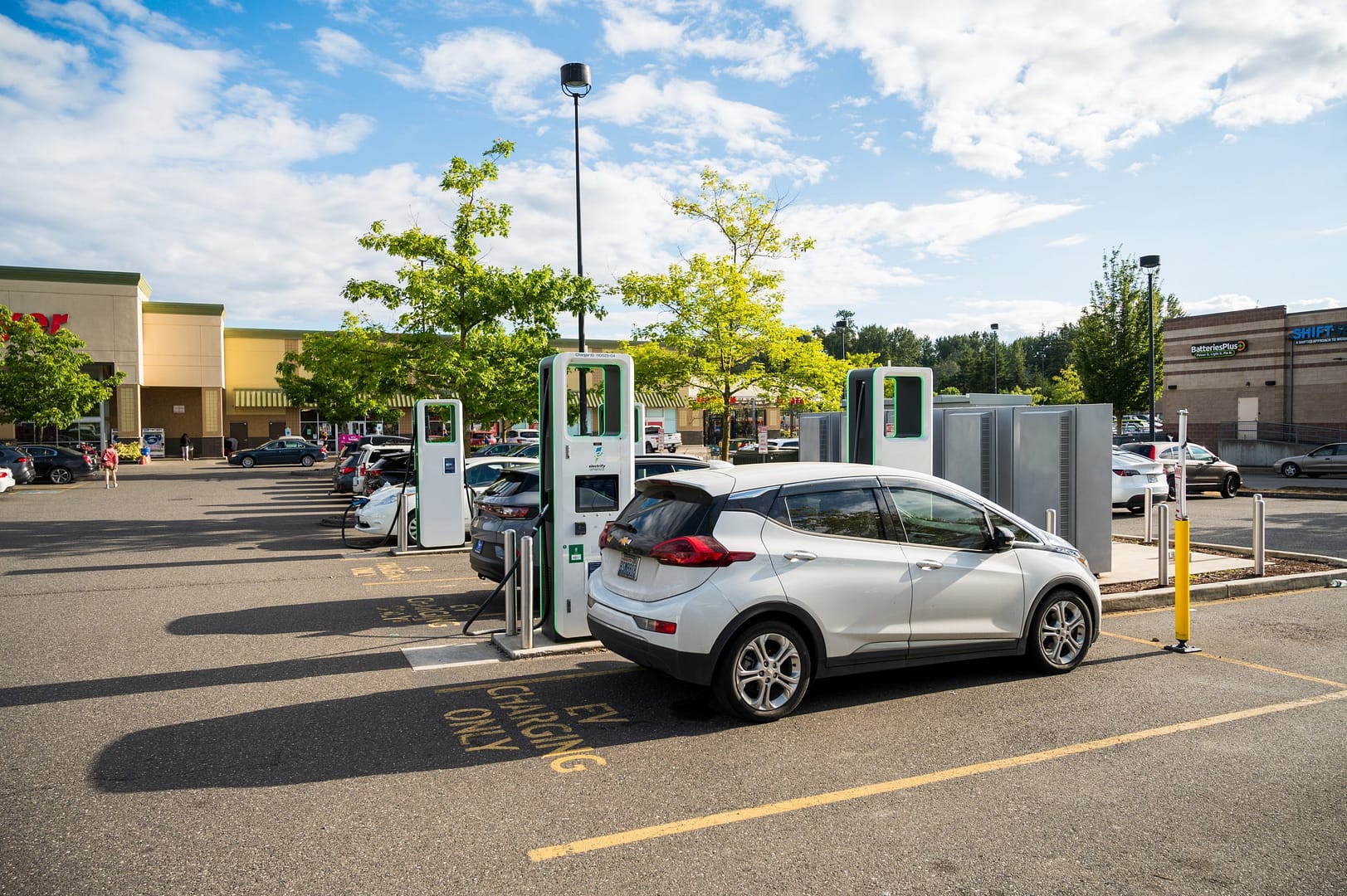
- The Clean Fuel Standard, which will reduce carbon pollution from transportation. Transportation is the largest source of greenhouse gas emissions in Washington. Learn more about the Clean Fuel Standard here: Clean Fuel Standard.
- An added climate goal to the Growth Management Act, which requires local comprehensive plans to have a climate element with resilience and greenhouse gas emissions mitigation sub-elements. Learn more about the climate element here: Department of Commerce Climate Element Overview.
The Department of Ecology has a wide range of programs responding to climate change and planning for future impacts of climate change. Explore Ecology’s programs and climate change response here: Responding to Climate Change.
In 2012, Washington published the State’s Integrated Climate Response Strategy, which recommends policies and programs to better prepare Washington to respond to the impacts of climate change. The Department of Ecology also published an updated Climate Resilience Strategy in September 2024.
Washington developed the Washington Health Disparities Map, which is an interactive mapping tool that compares communities across the state for environmental health disparities. It can be used to identify where public investments should be prioritized to address these disparities across our communities. Learn more here: Department of Health Environmental Health Disparities Map.
Many cities, counties, regions, and educational institutions have developed their own climate action plans, or are in the process of doing so. Climate action plans (CAPs) are strategic plans for climate protection and climate change mitigation.
What are Washington’s most significant climate pollution sources?
Transportation is the largest source of greenhouse gas emissions in Washington, contributing 39% (40.3 million metric tons) of Washington’s emissions in 2019. The next largest source is residential, commercial, and industrial heating (25%, or 25.3 million metric tons) and electricity generation (21%, 21.9 million metric tons). Finally, the remaining 14% of Washington’s greenhouse gas emissions come from agriculture (6.2 million metric tons), industrial processes (5.3 million metric tons), waste management (2.4 million metric tons), and natural gas distribution (0.7 million metric tons). You can learn more about Washington’s greenhouse gas inventory here: Department of Ecology Greenhouse Gas Inventory.
Washington requires some facilities to report their greenhouse gas emissions annually. You can view the map of greenhouse gas reporting facilities here: Greenhouse Gas Reporting Program Map.
Why is the focus on collaborative climate action, rather than state-led or locally siloed climate action?
Collaboration is critical to reducing greenhouse gas emissions, responding to climate change, and protecting our communities and ecosystems from the effects of climate change. Climate change is a global issue, and it requires a coordinated response across international, national, regional, state and local levels. Due to the urgency and pace of climate change, collaborative climate action ensures that our efforts aren’t counterproductive or siloed.
As a citizen, what steps can I take to reduce and prepare for the impacts of climate change?
You can take steps to reduce greenhouse gases emissions from your home, vehicle, and activities. Read about these steps at:
- What You Can Do to Reduce Greenhouse Gases(Department of Ecology).
- What You Can Do About Climate Change(EPA).
In addition to reducing the greenhouse gas emissions from your transportation and home, you can also take steps to prevent food from going to waste! One-third of all food in the United States goes uneaten. For information on how to prevent food waste at home, visit: Preventing Wasted Food At Home (EPA).
For information on how to compost at home, visit: Composting at Home (EPA).
How can I learn more about how tribes have been addressing climate change?
Tribes and indigenous communities in the Pacific Northwest have been at the forefront of climate action and are implementing creative, knowledge-based projects and practices to adapt and mitigate the effects of climate change. In particular, Tribes have been leading salmon, steelhead trout, and bull trout population recovery and habitat restoration efforts for decades. Traditional ecological knowledge, scientific expertise, and resource management practices have been instrumental in guiding fisheries co-management between Tribes and government agencies.
Many tribes have created and are now implementing climate action or adaptation plans, as well as climate vulnerability assessments. These plans guide tribes’ climate change mitigation and adaptation efforts. The Pacific Northwest Tribal Climate Change Project maintains a database of tribal adaptation plans here: Tribal Adaptation Plans.
To learn more about tribal leadership in climate adaptation and mitigation, you can explore the Tribal Climate Change Profiles, which attempt to represent a portion of the many innovative programs Tribes are implementing across the Pacific Northwest region and country: Tribal Profiles.
The Affiliated Tribes of Northwest Indians (ATNI) Climate Change Project serves as a centralized coordinator for tribal and intertribal climate change efforts, supporting ATNI Tribes in regional, national, and international climate adaptation and mitigation efforts. They host annual Tribal Climate Camps which aim to build knowledge of climate science and tribal capacity for climate adaptation. They also host annual National Tribal Leaders Climate Summits, which convenes leaders from Tribes and First Nations to advance climate change policy and action.
The Pacific Northwest Tribal Climate Change Network is a communication hub for Tribes, agencies, and others to coordinate on policy, programs, and research needs related to Tribes and climate change: PNW Tribal Climate Change Network.
How have local jurisdictions responded to climate change so far?
Many local governments around Washington have developed or are in the process of developing climate action plans (CAPs). A climate action plan lays out specific actions that a community will undertake to reduce greenhouse gas emissions, and outlines adaptation strategies the community will implement to respond to the negative impacts of climate change. The Municipal Research and Services Cetner (MRSC) has compiled a list and map of climate-related documents prepared by local and tribal governments in Washington here: Local Government Climate Change Documents.
In addition to climate action plans, local governments have implemented a wide variety of tools, plans, and programs to address climate change at a local level. Through the Growth Management Act (GMA), rapidly growing cities and counties develop comprehensive plans to manage that growth. These comprehensive plans are now required (through HB 1181) to include climate change and resiliency planning. Local governments can make a significant difference for reducing greenhouse gas emissions through land-use and transportation planning.
Questions about Phase 1: Priority Climate Action Plan (PCAP)
What is the Priority Climate Action Plan (PCAP)?
The Priority Climate Action Plan (PCAP) is the first milestone of CPRG and is due March 1, 2024. The PCAP is a plan for near-term pollution reductions. The PCAP includes a focused list of near-term, high-priority, implementation-ready measures to reduce greenhouse gas pollution. The priority greenhouse gas measures identified in the PCAP will be eligible for Phase 2 implementation grants.
In addition to the list of priority greenhouse gas measures, the PCAP must include a greenhouse gas inventory, a low-income and disadvantaged communities (LIDAC) benefits analysis, and a review of the entity’s authority to implement the plan. Coordination and collaboration between state agencies, air pollution control agencies, and municipalities is critical to the development of the PCAP. Since the PCAP identifies priority greenhouse gas reduction measures that are ready for implementation, it is important that the PCAP be representative of priority measures across multiple levels of implementation and align closely with existing plans and strategies.
The PCAP is a pre-requisite to compete for CPRG implementation grants, which is a competitive funding process to award $4.6 billion for implementation. Greenhouse gas measures must be named in the PCAP to be eligible for Phase 2 funding. Entities (such as a local jurisdiction) can apply for implementation funding if the greenhouse gas measure they are proposing to fund is included in the State’s PCAP.
Through the Growth Management Act (GMA), rapidly growing cities and counties develop comprehensive plans to manage that growth. These comprehensive plans are now required (through HB 1181) to include climate change and resiliency planning. Local governments can make a significant difference for reducing greenhouse gas emissions through land-use and transportation planning.
Where can audiences review the completed PCAP?
You can access the latest updates on PCAP progress on Box. Commerce posted the completed PCAP on Box February 27, 2024.
How were PCAP projects prioritized?
Commerce/Ecology collected existing priority greenhouse gas reduction measures from state and local plans and programs while building the PCAP. Commerce/Ecology also developed a statewide survey that sought input on priority greenhouse gas reduction measures for the PCAP.
The PCAP priority measures are not an exhaustive list of Washington’s priorities. Instead, Commerce/Ecology used the following criteria to prioritize measures for the PCAP:
The measure is implementation ready, meaning that the design work for the policy, program, or project is complete enough that a full scope of work and budget can be included in a CPRG implementation grant application.
The measure can be completed in the near term, meaning that all funds will be expended, and the project completed, within the five-year performance period for the CPRG implementation grants.
The measure advances the greenhouse gas reduction mandates in RCW 70A.45.020.
If you have any questions about the PCAP, please contact Dina Geiszler at Dina.Geiszler@Commerce.wa.gov.
What are some PCAP themes or highlights relevant to audiences in Washington?
The PCAP priority measures are divided into the following sectors: agriculture; built environment; electric power; waste, water, and sustainable materials management; transportation.
The PCAP was used to identify projects for CPRG implementation grants. The PCAP is the starting point for the CCAP, and it is not a comprehensive list of greenhouse gas reduction measures.
If a project or idea is not in the PCAP, can it still be funded? What is the path for an audience to move an idea forward?
If a project or idea is not identified in the PCAP, it will not be eligible for funding through the CPRG implementation grants. However, there are other funding opportunities available for climate action and greenhouse gas emission reductions, including:
- Commerce’s 2023 – 2025 Climate Planning Funding website, grant instructions,and FAQ.
- Commerce’s Energy Programs in Communities (EPIC) Grants website, and fact sheet.
- Washington State contracting and grant opportunities related to Climate Commitment Act.
- Washington Climate Action Rebate & Incentive Programs.
Subscribe to Commerce’s Energy Update listserv to be notified of new grant opportunities as they arrive.
Questions about Phase 2: Comprehensive Climate Action Plan (CCAP)
What is the Comprehensive Climate Action Plan (CCAP)?
The Comprehensive Climate Action Plan (CCAP) is the second milestone of CPRG and is due December 1, 2025. The CCAP is a long-term plan to meet state and federal climate and energy mandates.
The CCAP will analyze all significant sources and sinks of greenhouse gases in the state of Washington. A greenhouse gas source is something that emits greenhouse gases, and a greenhouse gas sink is a resource that absorbs or sequesters greenhouse gases from the atmosphere. The CCAP will establish robust greenhouse gas emission reduction goals and strategies to achieve these goals across all sectors. In addition, the CCAP will include an updated greenhouse gas inventory with more state-specific data and a current emissions profile, a benefits analysis for the state of Washington, a LIDAC benefits analysis, and workforce planning analysis.
The CCAP will include an in-depth public engagement process, to ensure the CCAP is guided by the priorities and needs of Washington communities, particularly communities that have been disproportionately impacted by climate pollution.
What is the Comprehensive Climate Action Plan Advisory Committee?
Over the next year, Washington state will be developing a Comprehensive Climate Action Plan (CCAP) to meet state and federal climate and energy mandates. We recognize that climate change impacts everyone. Washington’s CCAP will have potential implications for all sectors of the economy and all communities impacted by climate change. We are forming a CCAP Advisory Committee to advise lead agencies (Department of Commerce and Department of Ecology) on CCAP development, engagement, and content. Committee members will also provide an important avenue for connection between the CCAP lead agencies and the communities/groups that they represent.
The following people were selected to participate on the CCAP Advisory Committee:
- Anuscheh Nawaz, University of Washington
- Arlene Alen, Walla Walla Valley Chamber of Commerce
- Benjamin Harrison, Port Gamble S’Klallam Tribe; University of Washington
- Blythe Delarosa, Confederated Bands and Tribes of the Yakama Nation
- Cameron Steinback, Front & Centered
- Carly Michiels, Washington Public Ports Association
- David Stensland, Itron
- Irene Shaver, Washington State Board for Community and Technical Colleges
- John Traynor, Washington State Labor Council
- Kevin Fagan, Resource Synergy
- Lauren Clemens, Whatcom County
- Malia Pownall, A Supportive Community for All
- Mansee Chauhan, Walla Walla Valley MPO
- Mel Clark, Clean Tech Alliance
- Paula Sardinas, FMS Global Strategies/We Build Back Black Alliance
- Steve Stuart, City of Ridgefield
- William Barlow, Sustainable Tri-Cities
How will CCAP engagement unfold across Washington?
The goal of CCAP engagement, and CPRG program overall, is to directly reduce greenhouse gas pollution in your community. Reduced greenhouse gas pollution will result in cleaner air to breathe and healthier communities to live in, and the programs funded through CPRG will create green jobs for Washingtonians. CPRG is an unprecedented opportunity from the federal government to fund both near- and long-term emissions reductions programs and actions. We want to use this opportunity to ensure Washington leads the nation in climate action.
Commerce and Ecology are prioritizing engagement with urban, rural, and underserved or disadvantaged communities; federally recognized Tribes; the general public; and community and faith-based organizations. There will be several different ways for partners and community members to get involved.
We will share opportunities for involvement, participation, and feedback through this website as well as the Energy Updates listserv, Commerce’s CPRG website, and future online surveys.
Where can we get updates about CCAP progress?
The Washington Climate Partnership hosts quarterly public meetings to share progress on CPRG planning activities. The full meeting schedule is below, and meeting links, agendas, slides, materials, and recordings are available on Box. Commerce will share more information via the CPRG website and the Energy Updates listserv.
Questions about Phase 3: Status Report
What will the Status Report include?
The Status Report will provide an update on CCAP implementation. It will include a status update on all CCAP greenhouse gas reduction measures, updated greenhouse gas emissions and community benefit analyses, and next steps for continued CCAP implementation.
What is the timeline for the status report?
The Status Report and Update is the third milestone of CPRG and is due Summer 2027.
How can audiences receive the Status Report?
Once available, Commerce/Ecology will post the Status Report on the CPRG Program website.
Once available, Commerce/Ecology will share the Status Report via the Energy Updates listserv.


